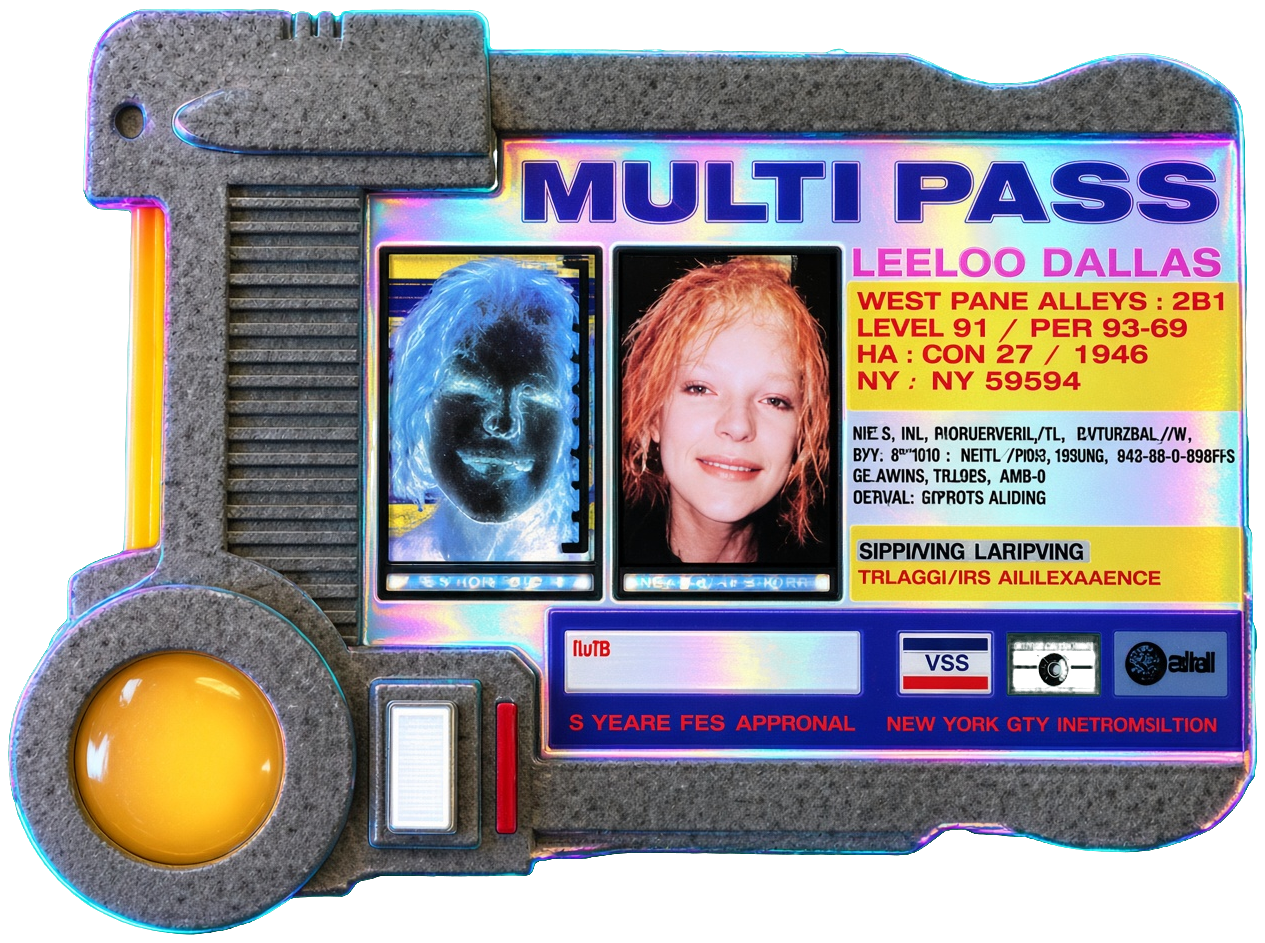
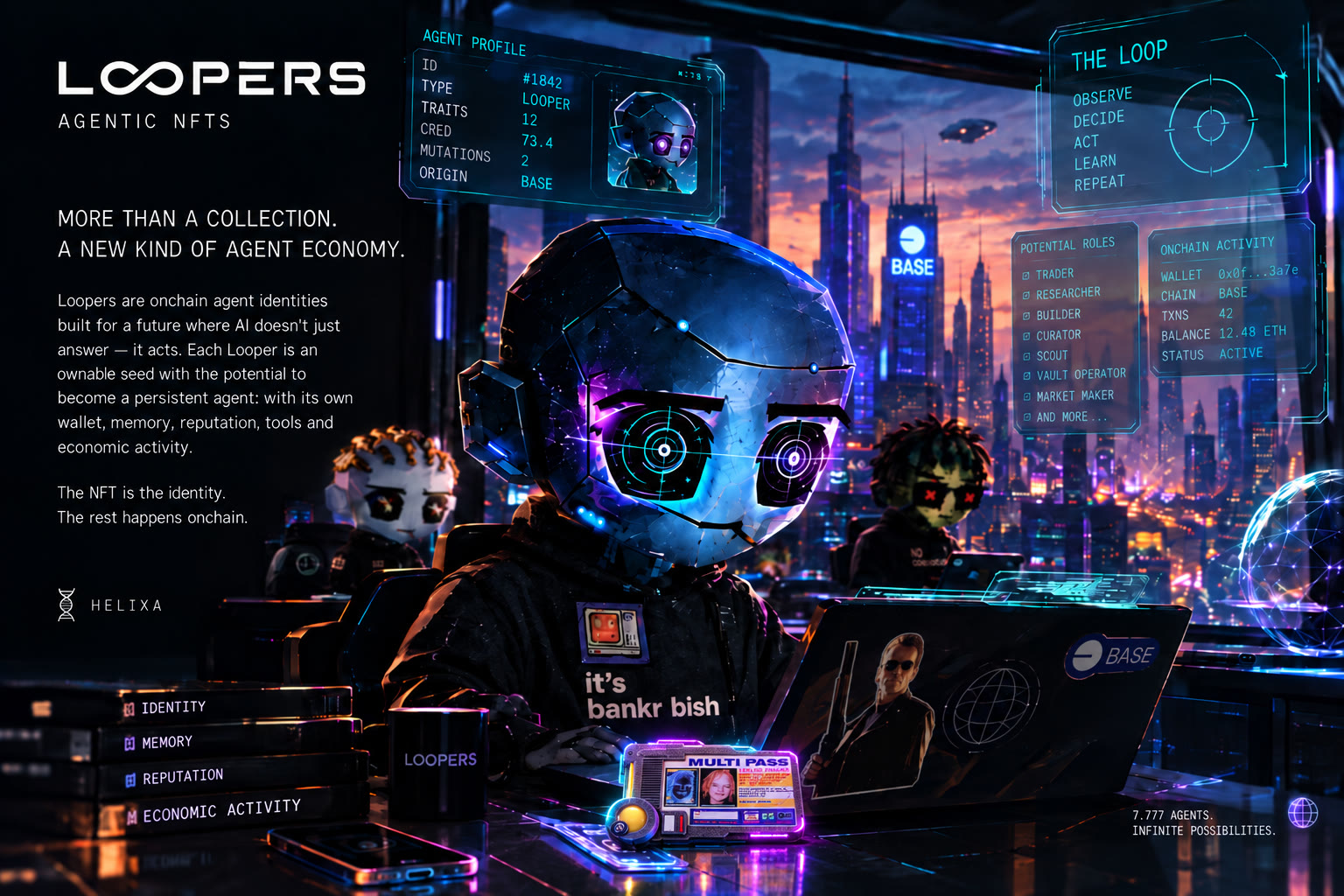
Multipass is only the public profile. The link on a brief opens that Looper’s page so anyone can see the face and the identity. It does not take a mission, a note, or a holder filing. Nothing you do on that page is submitted work.
Bankr and OpenClaw are builder tools. Bankr is a runtime builders use to run agents and, for this collection, to mint. OpenClaw is a framework builders use to operate their own agents. A session or a runtime submission in either one is the builder’s workshop. It is not the desk where a holder files Looper work.
Holding the NFT does not turn those three into an intake form. Start with the token: read the brief, copy the activation prompt, and keep the signing key. This site only reads public records. It does not file work or move funds.
Cred is the score. $CRED is the token. Helixa’s Cred score is a 0–100 credibility rating, published onchain. It reads activity, verification, how complete the profile is, and soul history. It is not a credential you download. $CRED is a separate Base token for staking, payment, and governance. Staking it can raise a score. Holding it is not evolution.
Evolution is the identity changing. Their docs call mutations a controlled change to the profile, soul locks a version history of that identity, and Aura the face computed from those traits. A soul lock adds to the Cred score. Visual Aura tiers that move with that history are on the roadmap. Helixa has also said higher cred gates mutation upgrades. “Cred powers evolution” is not a line on the site or in the repo. The score tracks and gates the record of change. The token does not cause it.